

Different Ways to Reduce the Impact of Rising Diesel Prices on Your Freight Bills
Posted on August 28, 2026
Written by Mickey Powers
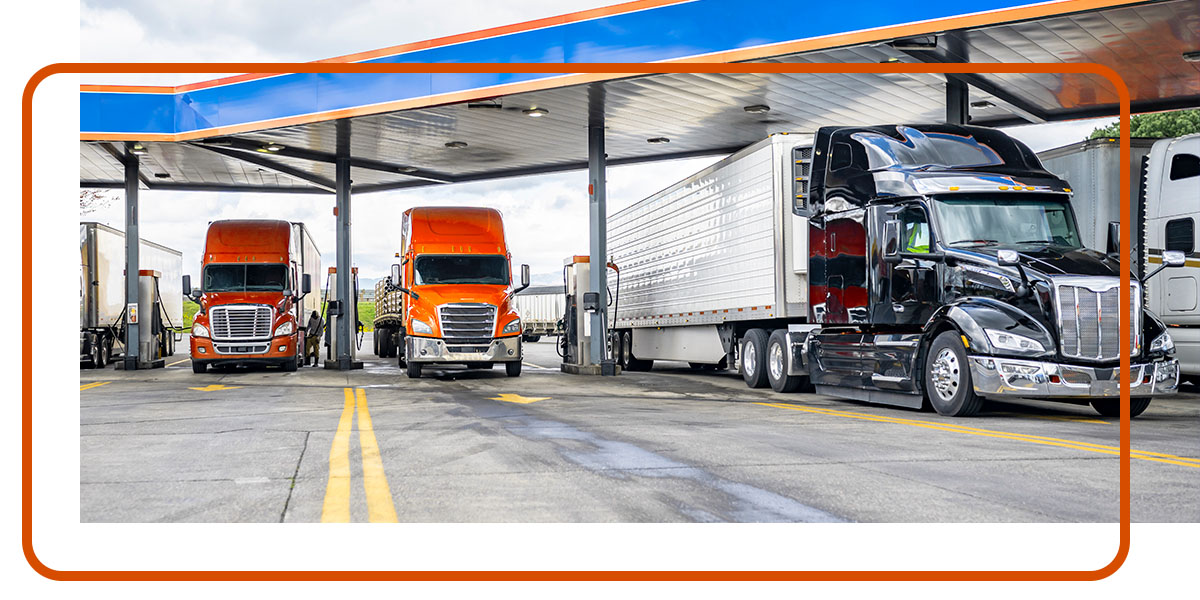
Weekly diesel price fluctuations create immediate pressure on freight budgets. Fuel surcharges tied to the national DOE index can distort actual costs for manufacturing, distribution, retail and e-commerce decision-makers. Regional pricing and timing misalignments often inflate invoices beyond real fuel costs in specific lanes.
Try these four different ways to reduce the impact of rising diesel prices on your freight bills. These data-driven strategies deliver measurable controls by targeting specific cost drivers to protect margins.
1. Audit Every Freight Bill for Hidden Savings
Understanding costs at a granular level lets you develop better strategies for managing them. As an effective method for uncovering billing errors, freight bill auditing provides immediate visibility into what impacts your profit margins. This strategy involves looking for common billing discrepancies.
- Tax and duty for cross-border shipments: Incorrect classification codes or outdated tax rates can result in overpayment on international freight movements.
- Inflated fuel surcharges due to miscalculations: Carriers may apply outdated diesel price fuel surcharge rates or miscalculate the percentage applied to the base rate.
- Weight variance discrepancies: Weight-based billing can shift when carriers use different scales or rate agreements don’t reflect packaging modifications.
- Missed discounts and contract misalignments: Negotiated rate reductions, volume discounts or accessorial fee concessions often fail to appear on invoices.
A systematic audit process can recover various amounts. For high-volume shippers, pre-audit freight bill review prevents overcharges before payment, giving organizations negotiating leverage and requiring carriers to prove their case. This approach contributes to accurate financial data, proper cost allocation and optimized cash flow by preventing unnecessary cash outflows.
2. Negotiate a Better Fuel Surcharge Program
Proactive negotiation is a powerful way to control fuel costs. It allows organizations to bypass the carrier’s default structure and establish a better fuel surcharge program.
Organizations can negotiate better shipping rates through these two strategies.
Move Beyond a Single DOE Index to a Market-Based Approach
A single DOE index provides a national average that may not reflect the actual cost of fuel in specific regions or lanes. Relying on this average can affect freight bills due to variables like state taxes, regional pricing and timing differences. For example, if the national average diesel price is higher than the fuel cost in a less expensive region or on a particular delivery day, a retailer using that average might overpay for shipments.
Market-based programs offer an alternative index that aligns charges with the specific fuel cost for each route by using real-time or lane-specific data. This approach reduces the distortion created by national averaging and ensures fuel surcharges more accurately reflect actual costs for a given lane.
Limit Volatility With Surcharge Caps and Collars
Caps and collars are surcharge mechanisms used to manage volatility and prevent fuel price spikes. Many high-volume shippers use these methods as risk management strategies to maintain financial control during periods of market instability. A cap sets a maximum percentage, while a collar defines a specific range.
These structures provide organizations with budget predictability even when fuel markets fluctuate. For example, a 25% cap means the applied surcharge will never exceed 25% of the agreed-upon base rate, regardless of how high fuel prices climb.
A surcharge collar defines upper and lower limits by defining a specific range within which the surcharge can fluctuate, such as between 10% and 20%. Predictable boundaries provide stability for shippers and carriers.
3. Optimize Your Freight Mode
Mode optimization reduces fuel consumption, logistical costs and the environmental impact of transportation operations. It involves strategically selecting the most fuel-efficient transportation for different segments of a supply chain. The goal is to match shipment characteristics such as urgency, volume, distance and freight type to the transportation method that best balances cost efficiency and service requirements.
For example, an organization might shift freight from over-the-road trucks to intermodal rail for longer hauls. The difference in fuel efficiency between these two methods offers many potential cost benefits. Rail transport typically consumes less fuel per ton-mile than trucking, making it a practical choice for non-urgent, high-volume shipments over extended distances.
4. Reduce Empty Miles Through Load Shipment Consolidations
Empty miles, also known as deadhead miles, represent the distance a truck travels without carrying revenue-generating freight. This phenomenon occurs when a truck delivers a shipment to a destination and returns without a backhaul load.
Empty miles are a substantial inefficiency that fleet operators should strive to resolve because they:
- Consume fuel without generating corresponding revenue.
- Incur unnecessary operating costs that keep impacting carrier profitability.
- Reduce fleet capacity availability for revenue-generating loads.
Comprehensive network analysis identifies shipment consolidation opportunities by identifying delivery patterns, shipment volume and freight lanes. Strategic load shipment consolidation increases the value extracted from each mile traveled by combining multiple smaller less-than-truckload freight shipments or planning full-truckload movements to provide optimal cube and weight distribution on every trailer.
How Broussard Logistics Lowers Freight Costs
Broussard Logistics has helped our customers manage and reduce their freight costs since 1978. Our auditing services can identify billing discrepancies before they affect your entire supply chain. Pre-audit freight bill review gives you negotiating leverage by proactively identifying issues.
Let us maximize value by analyzing each stage of your freight and shipping supply chain.
- Scanning bills for freight errors: We systematically review invoices to identify billing discrepancies before they compound.
- Contesting carrier charges: When we find errors, we resolve them by invoicing for the accurate amount.
- Handling payments on our client’s behalf: We manage the payment process to maintain cash flow control and prevent premature payment of disputed charges.
- Building reports on all exported data captured: Detailed analytics provide visibility into spending patterns and cost-saving opportunities.

Take Control of Your Fuel Costs With Broussard Logistics
There are many different ways to reduce the impact of rising diesel prices on your freight bills. Broussard Logistics has increased profits for clients in the e-commerce, energy, distribution and manufacturing industries. Through comprehensive auditing and contract renegotiation, we analyze distribution patterns and benchmark rates.
Our process identifies billing discrepancies, recovers overcharges, and restructures fuel surcharge programs to align with actual lane-level costs. We pride ourselves on being big enough to handle your logistical needs without losing the customer-focused approach that has built our reputation.
We’re always ready to bring the personal touch to our service, partnering with clients to negotiate cost-effective contracts. Contact us by filling out an application and learn how we can save you money.