
How to Negotiate Better Shipping Rates
Posted on January 15, 2026
Written by Mickey Powers

Even the most experienced shippers can feel like they’re leaving money on the table. However, if they don’t have the hard data, it can be challenging to negotiate better rates. Relying on your gut instinct or generic discount requests won’t get you far, as carriers use sophisticated yield management software to protect their margins. Negotiations can thus feel one-sided.
This guide will help you leverage your own shipping profile to create an evidence-based advantage in your next negotiation.
Why Most Shippers Lose Negotiation Power Before They Start
Many shippers may enter rate discussions assuming the pricing is still driven by relationships or simple volume commitments. That’s how most lose their negotiations even before they start. In reality, carrier pricing is more algorithmic and data-driven, and less loyalty- or relationship-based. Carriers rely on modern pricing models that evaluate each shipper’s profitability, including yours.
As you would score carriers using a carrier scorecard, nothing stops them from doing the same. Do you tend to have long wait times for loading or unloading? How frequently do you file claims? Are your payments slow? Volume matters little if you answered yes to these questions. All these factors play against your score, as they increase the carrier’s operating costs. They may see you as “expensive freight” that raises their operating ratio.
To show that you’re “attractive freight,” you must maintain a low operating ratio for the carrier. Your freight should be easy, predictable, consistent and efficient to move. You need to understand your shipping profile, the carrier and the market and have strong communication and negotiation skills. To be fully prepared, you can follow a few strategic steps.
1. Audit Your Shipping Profile to Build Leverage
Before you even engage with a carrier or 3PL, you must understand your own shipping profile from their perspective. The information in a carrier’s internal shipper profitability models influences the cost and efficiency of your freight. So if you see any signs that you are spending too much on freight costs, it’s time to gather all the details.
At a minimum, try to build and audit your shipping profile using the following metrics that carriers use:
- Accessorial charges
- Average shipment density
- Average shipment dimensions
- Average shipment weight
- Claims rate frequency
- Lane usage
- Shipment Volume by day of the week
- Seasonality or volume fluctuations
- Dwell times on pickup and delivery
- Invoice accuracy
- Payment cycles
- Shipment volume by mode
With the above data, you can identify potential internal bad habits that inflate carrier costs. If you correct any inefficiencies well before negotiations start, you may signal to carriers that you are a lower-risk shipper who offers higher value. Bring about six to 12 months’ worth of improved shipping data. Because carriers value data, you can immediately differentiate yourself from other shippers who solely rely on projected volume estimates.
While you audit, pay special attention to your historical parcel & LTL contract specifics to identify where you may have overpaid on accessorial charges. It’s essential to understand the fine print before entering a negotiation.
2. Deconstruct the Carrier’s Pricing Model
Don’t fall into the common negotiation trap of chasing a large percentage discount off an inflated base rate. The only number that matters is the net cost, the final invoiced amount. For example, an 85% discount on a current LTL base rate may still leave you with a higher net cost than with a 35% discount on a historical base rate. Don’t allow discounts to mask the true expense.
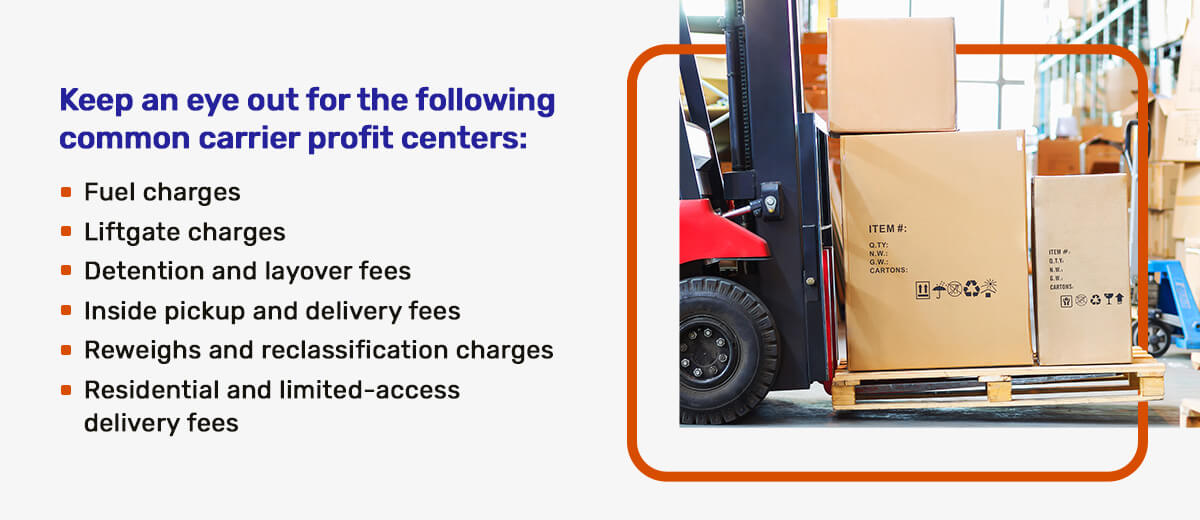
While the final invoiced amount matters most, you still want to be aware of accessorial charges. That’s where carriers can protect their margin. These charges can quietly outweigh the base rate savings if you leave them unchecked. Save costs on your contracts, by knowing what additional services impact you the most, and keep an eye out for the following common carrier profit centers (all are negotiable items in your contract):
- Fuel surcharges
- Liftgate charges
- Detention and layover fees
- Inside pickup and delivery fees
- Arrival notify and appointment feeds
- Single shipment charges
- Over-length fees
- Reweighs and reclassification charges
- Residential and limited-access delivery fees
General rate increases (GRIs) can also complicate a carrier’s pricing model. GRIs are inevitable, but their impact is negotiable. To combat GRIs, you must understand your freight economics and carrier cost drivers.
3. Benchmark Against the Market
Like most shippers, you can only see your own rates. You have limited visibility into what your competitors, who are moving similar freight on the same lanes, are actually paying. Without an adequate amount of market context, you go into the negotiation unprepared. It becomes challenging to determine whether a rate is competitive.
A third-party market intelligence source can help fill this knowledge gap. A transportation management system (TMS) or an automated rate shopper tool, for instance, can help compare carrier pricing in real time. You can turn each load into a live pricing event rather than relying on static contract rates and market stats. Many carriers, through their API’s, now offer “Dynamic Pricing” that gives additional pricing concessions based on lane inbalances in their system (these “special” rates dynamically change throughout the day).
Some rate shopper tools come with advanced features that expose pricing anomalies. With such up-to-date data, you can course-correct immediately. And over time, this creates a dynamic benchmark that reflects actual market behavior. There’s no need to rely on outdated assumptions when you leverage smart logistical technology.
4. Use Tactical Negotiation Strategies
As you look at the following strategies, keep in mind that the goal is not to “win” a single rate concession. You want to engineer a pricing framework that reduces volatility and total costs over time. Here are a few tactical negotiation strategies to implement:
- Diversify your carrier mix: If you’re over-reliant on a single carrier, then you have limited leverage. Create competitive pressure and introduce other qualified carriers into key lanes to reduce your dependency risk.
- Negotiate terms: Focus on terms and not just rates, especially when they’re fixed. Nonmonetary concessions may include extended payment terms or higher liability limits.
- Trade volumes for caps: If the carrier requests a specific volume commitment, instead of just agreeing, think about how you can exchange those commitments for cost protections. Negotiate them for caps on fuel surcharges, delayed GRIs or other methods to keep costs favorable.
- Segment your freight: Do you have a freight profile that varies by lane or service level? Negotiate the pricing and terms at those segment levels instead of applying a single rate structure across all shipments.
- Time your negotiations: In cases where capacity loosens or demands soften, initiate renegotiations outside the annual bid cycle. Time your negotiations with market conditions. Midcycle negotiations may be easier when carriers need volume stability.
There are more shipping strategies to consider that will help set your business apart.
Maximize Your Margins With Data-Backed Logistics
Carriers often have teams of pricing analysts and software that the average logistics manager lacks, leaving them outgunned without similar support. Shippers need reliable solutions and accurate data to arm them during negotiations. A strategic logistics partner can provide you with buying power through enhanced market visibility, benchmarks, and in-depth analysis.
Broussard Logistics can be your partner. With over $1 billion in freight payables, a proprietary Rate Shopper tool and a team of former carrier pricing analysts, we can equip you with carrier-level intelligence. Our carrier rate negotiation services further help level the playing field through decades of expertise and access to massive amounts of data and market information.
Get in touch with us today to learn more about where you stand against the market.